

The Illusion of the Trading Model
For decades, the dominant image of the commodity business has been the trader — agile, opportunistic, capital-light, operating between producers and buyers, arbitraging price discrepancies across geographies.
It is a model that built giants.
From the late twentieth century onward, trading houses mastered logistics, financing, and market intelligence. They thrived on volatility. They operated with thin margins but enormous volume. Their strength was liquidity and risk management, not production ownership.
Yet structural shifts in global supply chains are redefining the model.
The next decade will not primarily reward those who trade what others produce.
It will reward those who control production.
The distinction is not semantic. It is existential.
The Traditional Commodity Value Chain
Historically, the commodity ecosystem separated into distinct layers:
- Producers – Concession holders extracting ore.
- Processors – Milling, smelting or refining operations.
- Traders – Marketing and logistics intermediaries.
- Financiers – Trade finance banks and structured credit providers.
- End Buyers – Industrial manufacturers, refiners, sovereign purchasers.
This segmentation worked efficiently during periods of abundant supply and stable geopolitics.
Traders thrived on:
- Geographic arbitrage.
- Inventory financing.
- Timing spreads.
- Counterparty intelligence.
- Structured prepayment arrangements.
However, the model assumed one crucial factor: stable access to physical supply.
That assumption is breaking down.
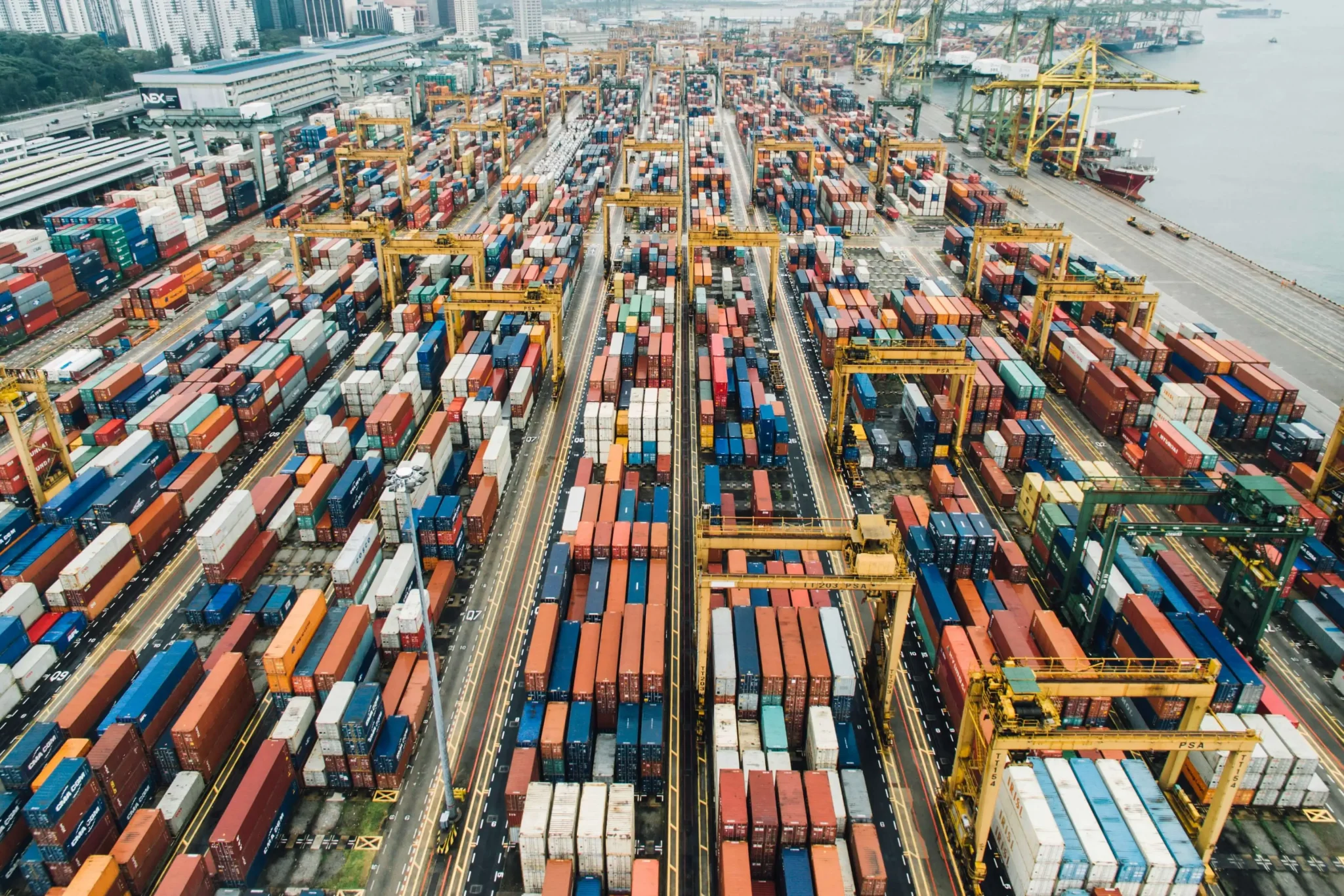
Supply Scarcity Changes the Hierarchy
When supply is abundant, trading skill dominates.
When supply becomes constrained, production control dominates.
The coming commodity cycle is characterised by:
- Structural underinvestment in mining.
- Longer permitting cycles.
- ESG compliance burdens.
- National resource protection policies.
- Geopolitical supply fragmentation.
In such an environment, traders without secured production are price takers.
Producers with integrated marketing capacity are price setters.
This is the strategic inflection point.
The Margin Capture Equation
To understand why integration matters, consider the simplified margin chain:
Extraction Margin
- Processing Margin
- Logistics Margin
- Trading Margin
- Financing Spread
= Total Value Capture
A pure trader accesses only the final layers.
An integrated commodity platform captures multiple layers.
Control over production allows:
- Greater offtake certainty.
- Stronger negotiation leverage.
- Better credit terms.
- Lower counterparty risk.
- Internal transfer pricing flexibility.
- Improved hedging precision.
Over time, this compounds.
Risk Reversal: The New Advantage
The traditional trading model relied heavily on counterparty credit assessment and balance sheet leverage. Traders financed producers via prepayments and inventory-backed lending, capturing spread while transferring production risk.
In a constrained supply environment, the risk profile reverses.
Industrial buyers increasingly seek:
- Long-term secure supply.
- Traceable origin.
- ESG compliance.
- Volume guarantees.
This reduces the bargaining power of purely financial intermediaries.
Production-backed platforms can structure offtake agreements directly with refiners, battery manufacturers, grid developers, and sovereign buyers.
The security of supply becomes the premium.
From Arbitrage to Infrastructure
The transformation from trader to integrated commodity major requires three strategic pillars:
- Concession Control
Without production rights, integration is impossible.
Securing concessions requires:
- Government alignment.
- Local partnerships.
- Community engagement.
- Legal structuring.
- Long-term capital planning.
Concession security is not transactional. It is political and structural.
- Processing Capacity
Raw concentrate export captures limited margin.
Processing capacity:
- Improves realised pricing.
- Reduces dependency on foreign refiners.
- Increases local economic contribution.
- Enhances ESG credibility.
- Attracts institutional capital.
Processing is infrastructure, not speculation.
- Structured Market Access
Production without market sophistication leaves margin exposed.
Integrated platforms must include:
- Risk management frameworks.
- Hedging strategies.
- Structured trade finance.
- Long-term offtake contracts.
- Logistics optimisation.
This is where trading expertise becomes a strategic asset — but now anchored in production.
“One of the greatest strategic misconceptions in commodities is that integration requires excessive leverage.”
The Capital Alignment Imperative
One of the greatest strategic misconceptions in commodities is that integration requires excessive leverage.
In reality, integration requires disciplined capital stacking.
Effective models combine:
- Equity for concession acquisition.
- Structured debt for plant development.
- Inventory finance for working capital.
- Offtake prepayments where appropriate.
- Hedging overlays to stabilise revenue.
The objective is not aggressive expansion.
It is controlled scalability.
Institutional capital increasingly prefers production-backed exposure rather than opaque trading books.
Geopolitical Fragmentation Favours Control
Global supply chains are fragmenting.
Western economies seek diversified mineral supply away from concentrated corridors. Governments are identifying critical minerals as national security assets. Resource nationalism is rising.
In such an environment, traders operating purely on transactional flows face unpredictability.
Integrated operators with direct host-government alignment are more resilient.
Production control reduces geopolitical exposure because relationships become bilateral rather than intermediary.
Case Study Logic: Copper and Gold
Copper
Electrification demand is accelerating, while new copper projects face long lead times.
Industrial buyers increasingly prefer long-term supply agreements directly with producers.
An integrated copper platform can:
- Lock in multiyear contracts.
- Optimise grade blending.
- Hedge selectively.
- Control inventory timing.
- Negotiate premium pricing for reliability.
Gold
Gold offers liquidity and monetary optionality.
Integrated gold production enables:
- Direct bullion relationships.
- Structured pre-refining arrangements.
- Cash flow stabilisation through partial hedging.
- Treasury flexibility.
Gold production, when integrated, can serve as internal liquidity for broader expansion.
Governance as Strategic Infrastructure
Institutional transformation requires governance discipline.
Integrated commodity majors must implement:
- Anti-corruption frameworks.
- Anti-slavery compliance.
- Sanctions screening.
- Environmental management systems.
- Transparent reporting structures.
- Independent audit processes.
Governance reduces financing costs and expands capital access.
It is not cosmetic — it is structural leverage.
The Evolution Path
The pathway from trader to integrated major typically follows phases:
Phase 1: Market Intelligence and Trading
Understanding flows, pricing, and counterparty risk.
Phase 2: Structured Finance
Providing inventory-backed capital to producers.
Phase 3: Offtake Alignment
Securing partial production rights via financing.
Phase 4: Concession Participation
Acquiring equity or full ownership in production assets.
Phase 5: Processing Integration
Developing or partnering in milling and refining capacity.
Phase 6: Institutional Scaling
Attracting long-term capital, establishing governance architecture, expanding infrastructure footprint.
Each stage reduces dependency on external supply.
Why Africa Is Central to This Transition
Africa’s mineral base combined with capital gaps creates strategic opportunity.
Many concessions require:
- Rehabilitation.
- Surface stockpile monetisation.
- Modern compliance structuring.
- Access to structured finance.
An integrated platform rooted in African production, but aligned with global capital standards, occupies a powerful position.
It becomes:
- A bridge between sovereign resource ownership and institutional finance.
- A stabiliser of supply in volatile corridors.
- A partner to industrial buyers seeking diversification.
The Myth of Asset-Light Superiority
For years, asset-light models were celebrated as superior due to flexibility and return on capital metrics.
In a scarcity environment, asset-light becomes asset-exposed.
Without secured production:
- Margins compress.
- Volatility increases.
- Counterparty competition intensifies.
- Industrial buyers bypass intermediaries.
Control of physical assets becomes the ultimate hedge.
The Long-Term Leadership Equation
The commodity leaders of the next decade will be defined by:
- Production ownership.
- Infrastructure integration.
- Risk discipline.
- Governance credibility.
- Strategic patience.
Short-term arbitrage will remain profitable during volatility spikes.
But enduring scale requires physical control.
Control Defines the Future
The commodity landscape is undergoing structural transformation.
Trading expertise remains valuable — but insufficient on its own.
The coming cycle will favour:
- Concession-backed platforms.
- Processing-enabled models.
- Structured finance integration.
- Institutional governance alignment.
The era of the purely opportunistic trader is evolving into the era of the integrated commodity major.
Control of production is no longer optional.
It is the defining advantage.